University of Melbourne for International Students in 2026: Tuition, Living Costs, and PR Pathways
The University of Melbourne is consistently ranked Australia's best university — #19 globally in the QS 2026 rankings and #8 in the world for graduate employability. For international students, it's also one of the most expensive choices, set in Australia's second-most-expensive city, with a curriculum structure that differs meaningfully from most other Australian universities. Whether it's the right choice depends entirely on what you're studying, what you're planning to do after graduation, and whether the premium price tag maps to outcomes your specific career path actually rewards.
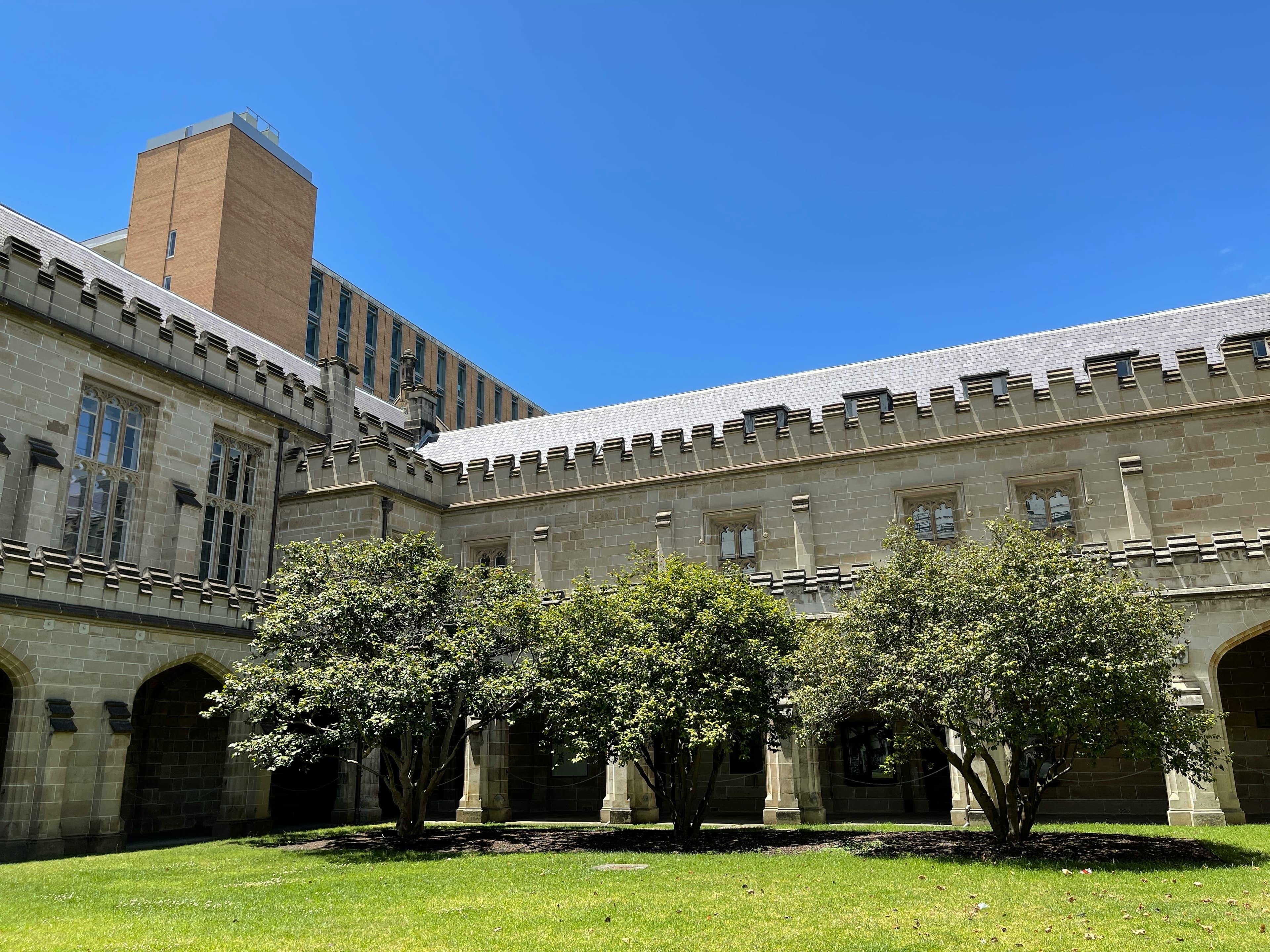
More than 25,000 international students from over 150 countries are currently enrolled at the University of Melbourne — making it one of the most internationally diverse campuses in Australia. Its Parkville campus sits 3km north of Melbourne's CBD, walkable from the city centre and well-connected by tram. The research funding exceeds AUD $660 million annually. The alumni network includes Nobel laureates, prime ministers, and the leadership of major Australian and international companies.
None of that means it's automatically the right university for you. This guide gives you the specific information you need to make that call for yourself.
The Melbourne Model: What It Is and Why It Matters
The Melbourne Model is the University of Melbourne's undergraduate curriculum structure — and it's genuinely different from every other Australian university. Understanding it is the first thing any prospective student needs to do, because it changes the cost, the timeline, and the pathway to professional careers in ways that catch people off guard.
- 1
Undergraduate degrees are broad — not professional Melbourne's bachelor degrees are designed to be generalist entry points rather than direct professional qualifications. A Bachelor of Science, Bachelor of Arts, or Bachelor of Commerce gives you a broad education across multiple disciplines — not a direct professional credential. The specialisation happens at graduate level.
- 2
Professional degrees — Medicine, Law, Teaching, Social Work — are graduate entry If you want to become a doctor, lawyer, or teacher through the University of Melbourne, you first complete a relevant bachelor's degree (typically 3 years), then apply to the graduate-entry professional program (2–4 years). This means Medicine at Melbourne is a minimum 7-year journey. At most other Australian universities, Medicine is a 5-year undergraduate degree. The Melbourne path costs more and takes longer — but the Doctor of Medicine (MD) produced is a graduate degree, which carries specific career and visa advantages.
- 3
The advantage: graduate-level specialisation in every professional field The Melbourne Model means that every professional program — Law, Medicine, Dentistry, Teaching, Social Work, Engineering (some pathways) — is a graduate degree. Graduate-entry professional degrees are the global standard for high-prestige professions. Melbourne's Juris Doctor (JD), Doctor of Medicine (MD), and Master of Teaching are all graduate programs — which means the credential has an international portability that undergraduate professional degrees often lack.
⚠️ The Melbourne Model adds cost and time — factor this in from the beginning If your goal is to become a doctor, lawyer, or teacher and you choose Melbourne's graduate-entry pathway, you are committing to at minimum 5–7 years of full-fee international study before you hold the professional qualification. At $42,000–$62,000+ per year in tuition alone, this is a $210,000–$434,000+ decision before living costs. At other Australian universities with direct-entry professional programs, the same qualification takes 3–5 years. The Melbourne Model is defensible for specific career goals — but it must be entered with open eyes about the total cost.
2026 Tuition Fees: The Real Numbers by Faculty
Melbourne's undergraduate fees are based on the subjects you study rather than a flat course rate — meaning your annual cost varies depending on your subject mix. The figures below represent the indicative annual cost for a standard full-time load (four subjects per year) in each major program area.
| Program | Level | Annual Fee (AUD) | Duration | Total Tuition Cost |
|---|---|---|---|---|
| Bachelor of Arts | Undergraduate | Approx. $38,000–$42,000 | 3 years | Approx. $114,000–$126,000 |
| Bachelor of Commerce | Undergraduate | Approx. $46,000–$50,000 | 3 years | Approx. $138,000–$150,000 |
| Bachelor of Science | Undergraduate | Approx. $44,000–$48,000 | 3 years | Approx. $132,000–$144,000 |
| Bachelor of Biomedicine | Undergraduate | Approx. $50,000–$54,000 | 3 years | Approx. $150,000–$162,000 |
| Bachelor of Engineering (Honours) | Undergraduate | Approx. $56,000–$62,000 | 4 years | Approx. $224,000–$248,000 |
| Master of Engineering | Postgraduate | Approx. $48,000–$54,000 | 2 years | Approx. $96,000–$108,000 |
| Juris Doctor (Law) | Postgraduate | Approx. $56,000 | 3 years | Approx. $168,000 |
| Doctor of Medicine (MD) | Postgraduate | Approx. $90,000–$121,000 | 4 years | Approx. $360,000–$484,000 |
| Master of Teaching | Postgraduate | Approx. $34,000–$38,000 | 2 years | Approx. $68,000–$76,000 |
| Master of Social Work | Postgraduate | Approx. $38,000–$42,000 | 2 years | Approx. $76,000–$84,000 |
| Master of Nursing | Postgraduate | Approx. $44,000–$50,000 | 2 years | Approx. $88,000–$100,000 |
| Master of Data Science | Postgraduate | Approx. $48,000–$52,000 | 2 years | Approx. $96,000–$104,000 |
💡 Fees increase annually — always verify on the official website before applying Melbourne's international tuition fees are indexed each year and can increase by 3–5% annually. The figures above are indicative for 2026. Always confirm the current fee schedule at study.unimelb.edu.au before accepting an offer or committing to a program. The offer letter you receive will specify the tuition fee for your first year — subsequent years are subject to annual indexation.
Strongest Programs: Where Melbourne Genuinely Leads
Melbourne's subject-level rankings tell a more targeted story than its overall #19 global position. These are the programs where it has genuine, measurable world-leading strength:
| Program / Subject Area | QS Subject Rank 2026 | Notes |
|---|---|---|
| Education | Top 10 globally | Master of Teaching highly regarded; strong state nomination for PR |
| Law | Top 15 globally | Graduate-entry JD; strong Asia-Pacific legal market reputation |
| Medicine | Top 20 globally | Graduate-entry MD; most competitive entry in Australia |
| Graduate Employability | #8 globally | Employer reputation highest of any Australian university |
| Engineering | Top 50 globally | Strong civil, mechanical, electrical pathways |
| Commerce / Finance | Top 50 globally | Melbourne Business School MBA ranked in Asia-Pacific top 10 |
| Data Science / IT | Top 60 globally | Master of Data Science increasingly popular for skilled migration |
PR Pathways: Which Melbourne Programs Lead to Permanent Residency
For international students whose goal extends beyond the degree to permanent residency, the program choice matters as much as the university choice. Melbourne offers strong PR pathways in several fields — but not all of its most prestigious programs lead to the easiest migration outcomes.
| Melbourne Program | Occupation After Graduation | 485 Visa Duration | PR Pathway | Difficulty |
|---|---|---|---|---|
| Master of Nursing / Graduate Entry Nursing | Registered Nurse | 4 years (Go8) | 189 / 190 / 186 — consistent shortage | 🟢 Accessible |
| Master of Teaching | Primary / Secondary Teacher | 4 years (Go8) | 190 state nomination — strong in VIC | 🟢 Accessible |
| Master of Social Work | Social Worker | 4 years (Go8) | 189 / 190 — on shortage list | 🟢 Accessible |
| Bachelor / Master of Engineering | Civil / Mechanical / Electrical Engineer | 4 years (Go8) | 189 / 190 / 482 employer sponsorship | 🟡 Moderate |
| Master of Data Science | Data Scientist / Analyst | 4 years (Go8) | 189 / 482 — competitive invitation rounds | 🟡 Moderate |
| Juris Doctor (Law) | Lawyer / Solicitor | 4 years (Go8) | 189 / 190 — lower on shortage priority | 🔴 Difficult |
| Doctor of Medicine | Medical Practitioner | 4 years (Go8) | 189 / 190 — strong but long path to registration | 🟡 Moderate (long timeline) |
💡 The Go8 485 visa advantage — what it means in dollar terms Graduating from any Go8 university, including Melbourne, gives you a Temporary Graduate Visa (485) that runs for 4 years in a major city — compared to 2 years for non-Go8 graduates. Those extra 2 years of full Australian work rights are worth, at an average graduate salary of $65,000–$80,000, approximately $130,000–$160,000 in additional earnings opportunity. That's a meaningful financial argument for the Go8 premium even at Melbourne's higher tuition rates.
Living in Melbourne: What It Actually Costs
Melbourne is Australia's second-most-expensive city after Sydney, and the cost of living near the Parkville campus is at the upper end of Melbourne's already elevated housing market. The university's own guidance suggests budgeting AUD $2,000–$2,500 per month for living costs — a figure that aligns with what most international students in Melbourne actually spend.
On-Campus Accommodation: University Colleges and Residential Halls
The University of Melbourne operates several residential colleges and student halls within or adjacent to the Parkville campus. These offer a structured living and academic environment — particularly valuable for first-year international students adjusting to Australia — but at a price premium over private share housing.
| Accommodation Type | Weekly Cost (approx.) | What's Included | Notes |
|---|---|---|---|
| University-managed residential halls (e.g. University House) | $380–$520/week | Room, utilities, Wi-Fi | Apply early — competitive allocation |
| Residential colleges (Trinity, Ormond, Queen's, etc.) | $550–$750/week | Room, meals, facilities, tutorial support | Full-year contract; strong social community |
| Private share house — Carlton, Parkville, Fitzroy | $300–$450/week | Room only; bills split separately | Best value; requires own setup |
| Private studio apartment — inner suburbs | $450–$650/week | Self-contained; all to yourself | Most expensive; most private |
The residential colleges at Melbourne are an important part of the university's social culture — and are worth considering for at least the first year even at the premium price. Trinity, Ormond, and Queen's colleges have been part of Melbourne's academic fabric for over a century and offer the academic tutorial and mentoring support that many international students find valuable when navigating a new educational system.
Scholarships for International Students in 2026
Melbourne offers over 1,200 scholarships across undergraduate, postgraduate coursework, and research programs. For international students, the most accessible and significant options are:
- 1
Melbourne International Undergraduate Scholarship 50 scholarships awarded annually. Provides a AUD $10,000 tuition fee remission in the first year, or up to 100% fee remission for the highest-ranked applicants. Automatic consideration — no separate application needed. Eligible for students from countries with GDP per capita under US$10,000, or high-achieving students in the top 3% of their cohort internationally. Not available to most Korean, French, or UK students by GDP criterion — but the merit-based 50% and 100% remissions are open to exceptional students from any country.
- 2
Melbourne Chancellor's Scholarship The most prestigious undergraduate scholarship — 50% fee remission for the full degree duration. For international students who completed IB in Australia with a score of 42+, or equivalent exceptional Year 12 results. Highly competitive; awarded on academic merit.
- 3
Graduate Research Scholarships (RTP / Melbourne Research Scholarship) For PhD and Masters by Research students. Covers full tuition fees, living allowance of AUD $39,500 per year, relocation grant, and OSHC. No separate application — automatic consideration if you apply for a graduate research degree by the October 31 deadline. This is one of the most significant scholarships in Australian higher education and genuinely changes the financial calculus for research students.
- 4
Australia Awards Scholarships (government-funded) Full funding from the Australian Government for students from eligible developing countries. Covers tuition, living allowance, flights, and health cover. Extremely competitive; application is to the Australian Government, not the university. Not available for Korean, French, or most European students — targeted at Asia-Pacific and African nations.
Working While Studying: The Part-Time Work Reality
Student visa holders at the University of Melbourne — like all Australian student visa holders — can work up to 48 hours per fortnight during semester and unlimited hours during semester breaks. In Melbourne's labour market, international students most commonly work in hospitality, retail, customer service, and tutoring. Average part-time earnings run $15–$25 per hour depending on role and industry.
At 48 hours per fortnight (approximately 24 hours per week during semester), a student earning $20/hour takes home approximately $960/week before tax — or roughly $48,000 over a 50-week year. After the 15% income tax rate typically applicable to low-income earners on a student visa, take-home is approximately $40,000–$42,000. This does not cover Melbourne's living and tuition costs, but meaningfully reduces the financial shortfall from savings brought from home.
⚠️ The 48-hour fortnightly cap is strictly enforced — and affects your visa Working more than 48 hours per fortnight during semester is a visa condition breach. Immigration authorities conduct employer data-matching to identify visa breaches. A confirmed breach can result in visa cancellation. Melbourne's high cost of living creates pressure to work more — resist it, or apply for an exemption through the university if you have demonstrated financial hardship. The visa is worth more than the extra income.
Admission Requirements: What You Actually Need
| Requirement | Undergraduate | Postgraduate (Coursework) | Notes |
|---|---|---|---|
| Academic | Strong Year 12 / equivalent — top 25–30% of cohort for standard programs; top 5–10% for Medicine/Law/Engineering | Bachelor degree with 65–75% WAM minimum; higher for competitive programs | Guaranteed entry scores vary by program — check each program page |
| English — IELTS | 6.5 overall (no band below 6.0) | 7.0 overall (no band below 6.5); Medicine/Law require 7.5 | PTE, TOEFL, Cambridge also accepted |
| Deposit | AUD $17,000 — credited to first semester tuition | AUD $17,000 — credited to first semester tuition | Required to confirm offer acceptance |
| Application deadline (2027 intake) | 31 August / 31 October 2026 | 31 May 2026 (mid-year) / 31 October 2026 | Apply early — popular programs fill before deadline |
The Honest Assessment: Is the University of Melbourne Right for You?
The University of Melbourne is worth its premium — for a specific type of student. It is not worth its premium for everyone, and recognising the difference before committing is the most valuable thing this guide can offer.
| Melbourne is the right choice if... | Melbourne is probably not the right choice if... |
|---|---|
| Your target is graduate-entry Medicine, Law, or Dentistry in Australia | You want direct-entry undergraduate Medicine or Law (go to UQ, Monash, or Adelaide) |
| You want Australia's highest-ranked employer reputation for corporate careers | Your budget is tight — Melbourne's combined tuition and living cost is the highest of any Go8 city |
| You're targeting a research PhD with scholarship funding | You're choosing primarily based on QS ranking number — the gap between Melbourne and Monash/UQ doesn't justify $30,000–$50,000 extra in living costs alone |
| You value the breadth of the Melbourne Model undergraduate experience | You want to start working in your profession as fast as possible — the Melbourne Model's two-stage structure adds time and cost |
| Your field has world-leading subject rankings at Melbourne (Law, Medicine, Education) | Your program is equally strong at a less expensive Go8 university — Nursing at Monash, Engineering at UNSW, IT at ANU |
The Total Cost: What a Melbourne Degree Actually Costs
| Scenario | Tuition | Living Costs | Total |
|---|---|---|---|
| 3-year Bachelor (Arts / Commerce) + part-time work offset | Approx. $126,000–$150,000 | Approx. $90,000–$114,000 | Approx. $216,000–$264,000 gross; Approx. $150,000–$185,000 net of work income |
| 2-year Master (Teaching / Social Work / Nursing) | Approx. $68,000–$100,000 | Approx. $60,000–$76,000 | Approx. $128,000–$176,000 gross |
| 4-year Engineering (Honours) | Approx. $224,000–$248,000 | Approx. $120,000–$152,000 | Approx. $344,000–$400,000 gross |
| 3-year Juris Doctor (graduate) | Approx. $168,000 | Approx. $90,000–$114,000 | Approx. $258,000–$282,000 gross |
| PhD — with full Graduate Research Scholarship | $0 (tuition waived) | Stipend covers most living costs | Effectively neutral or positive cash position |
💡 The PhD scholarship changes the entire equation For research-focused students, the University of Melbourne's Graduate Research Scholarship — full tuition waiver plus $39,500/year living allowance — makes a Melbourne PhD the most financially accessible path to an Australian permanent residency. The research visa (subclass 500) allows unlimited work hours during the PhD, and graduation from a Go8 institution with a PhD gives maximum points in the skilled migration points test. This pathway is genuinely underused by international students who could qualify.
Key Facts at a Glance
Quick Links
- →Official fees: study.unimelb.edu.au/how-to-apply/fees
- →Scholarships: scholarships.unimelb.edu.au
- →Accommodation: services.unimelb.edu.au/accommodation
- →Compare all Go8 universities: Group of Eight Guide 2026
Find the occupation your Melbourne degree leads to
Search 1,020 Australian occupations — salary ranges, shortage ratings, and visa pathways by ANZSCO code.
Explore Australian Careers →